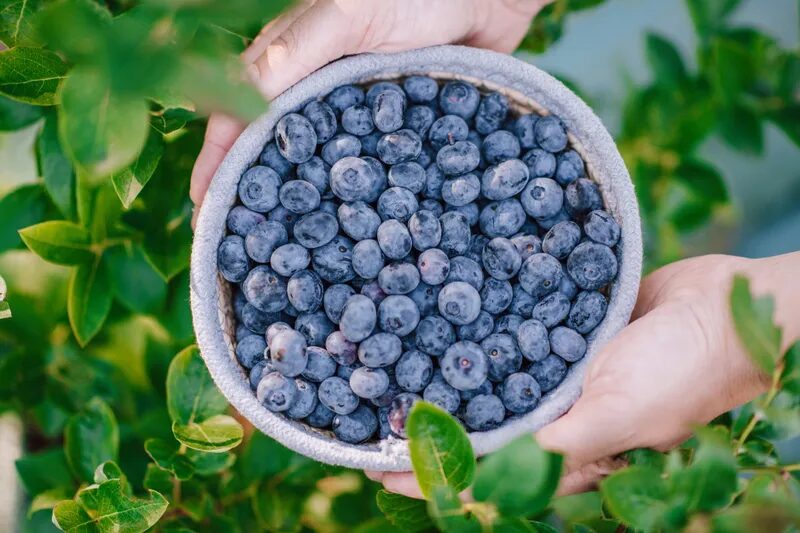
Duke, Bluecrop and Elliot
The backbone of the crop. Between them they carry the harvest from the first pick in early July through to the last of it in September.

Organic since 2003
Grown on sandy Dorset heathland, certified by the Soil Association, and picked by hand at the moment each berry is ready.
The ground
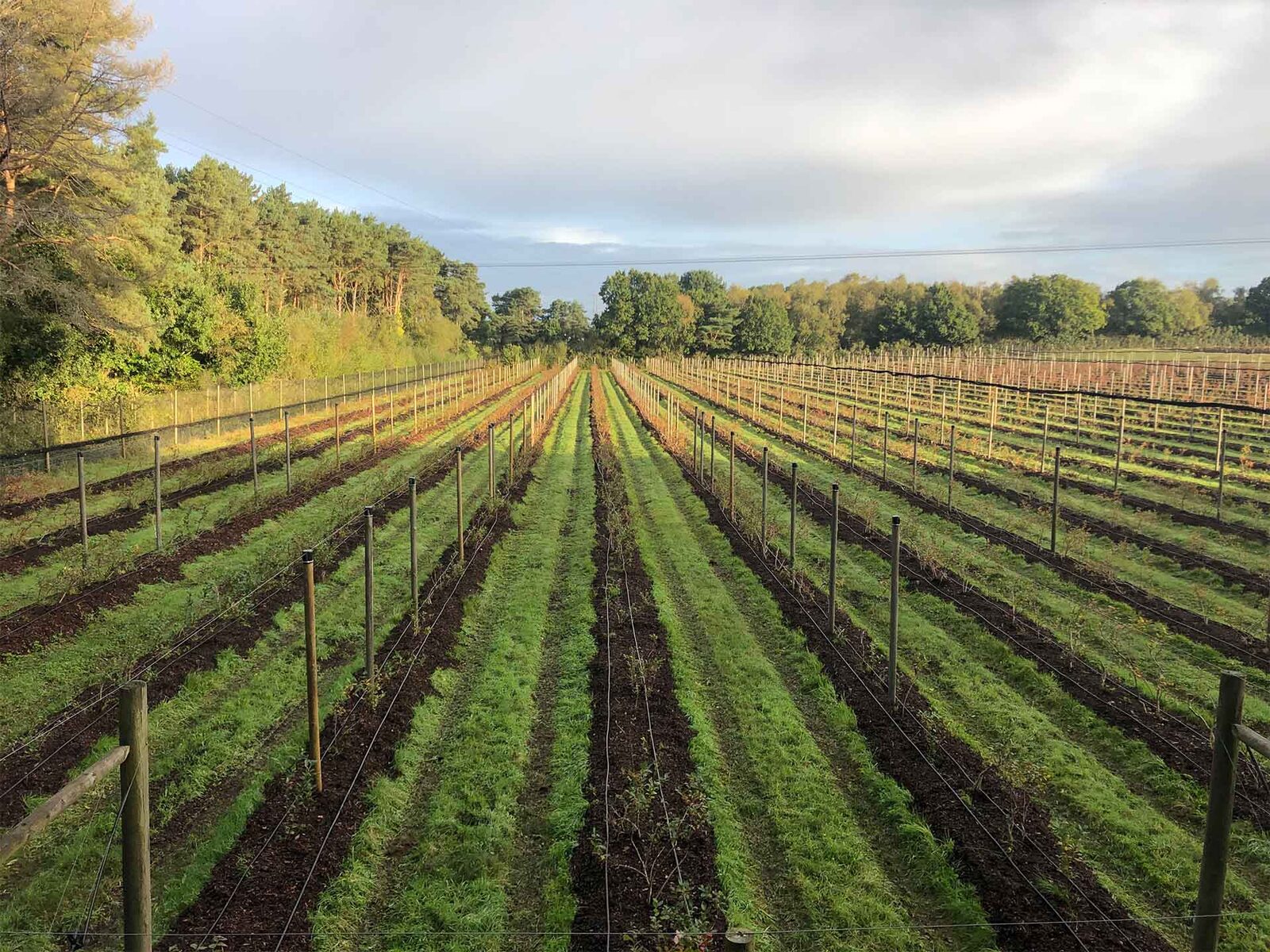
Blueberries want acid soil, sharp drainage and plenty of light. Dorset’s sandy heathland gives them all three. It is poor ground for most crops, which is exactly why a packet of free American plants took to it in 1951 when very little else would.
We work with that rather than against it: feeding the soil rather than the plant, mulching the rows, and leaving the margins and hedgerows to do what they do for the insects and birds that keep the whole thing in balance.
The varieties
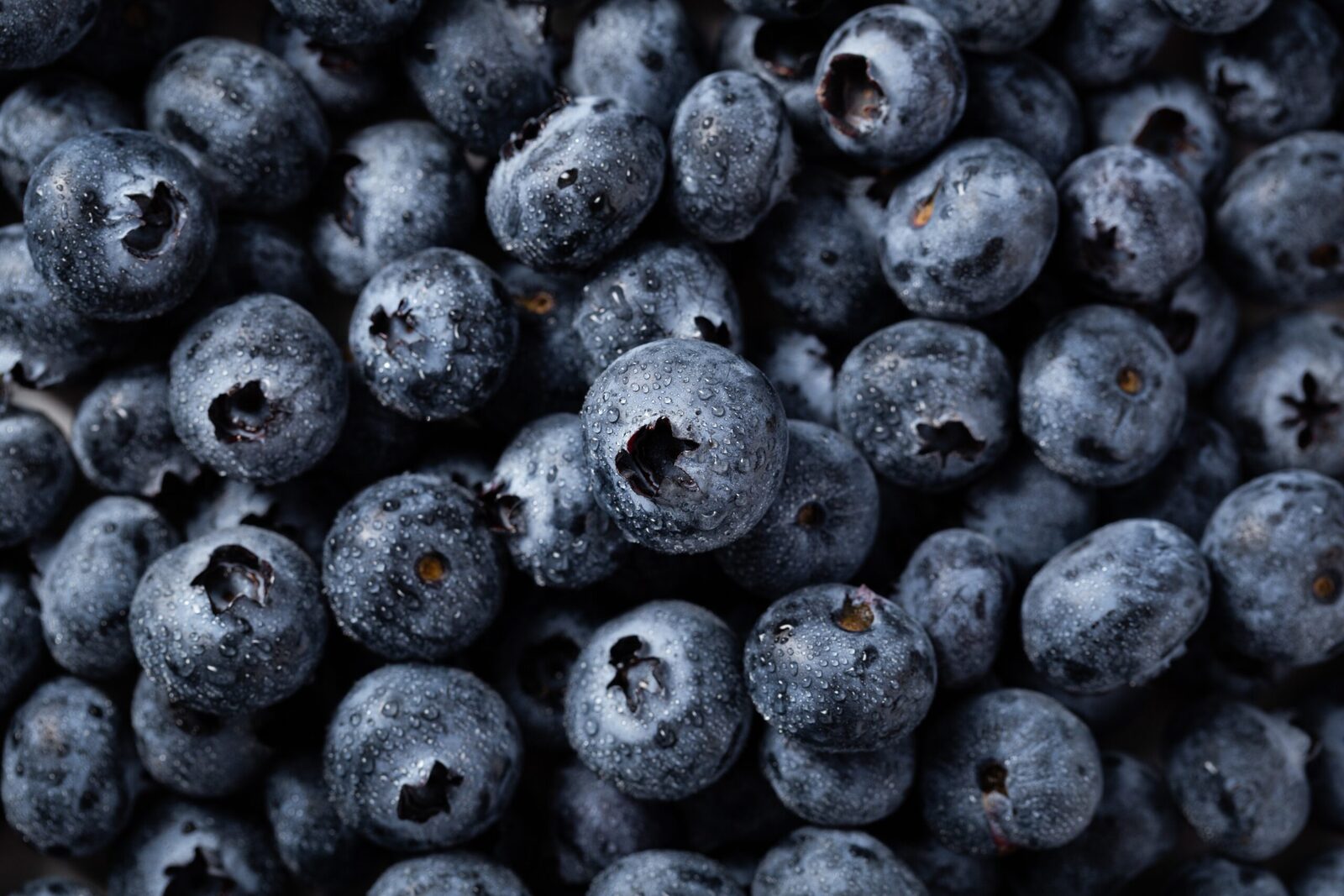
Blueberries do not all ripen at once, and no single variety carries a whole summer. We grow Duke, Bluecrop and Elliot alongside some real heritage varieties, which together give us roughly eight weeks of picking.
The backbone of the crop. Between them they carry the harvest from the first pick in early July through to the last of it in September.
Older varieties that the commercial world has largely moved on from, kept here for their bold flavours and their own character. They are a large part of why our fruit tastes the way it does.
The picking
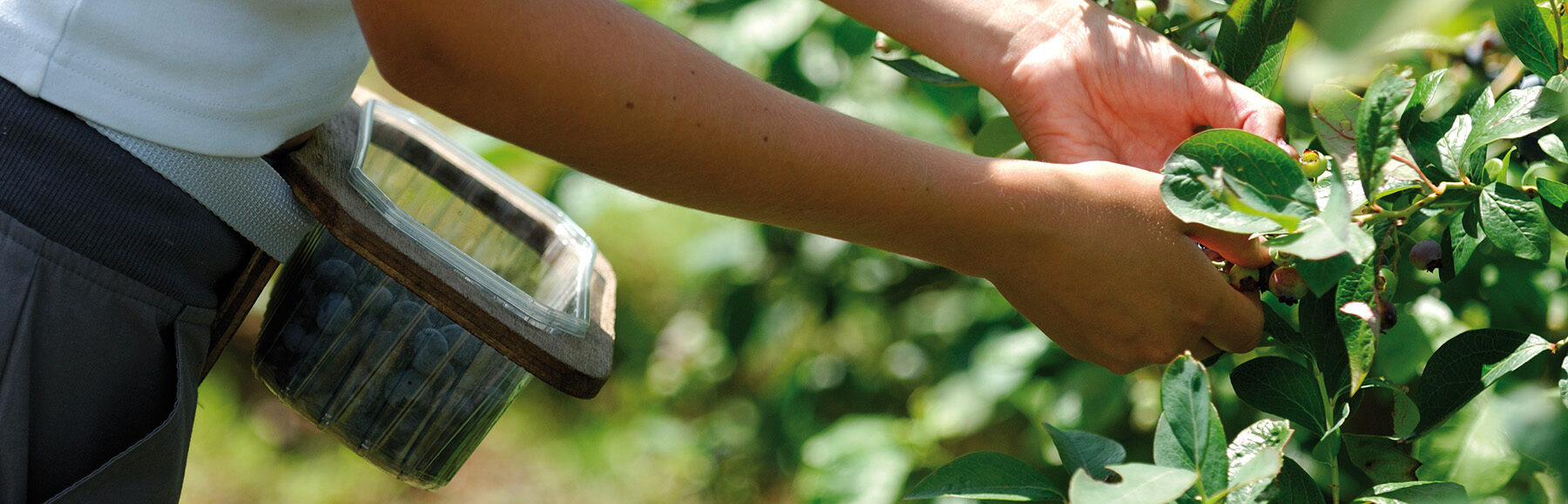
A blueberry bush ripens a few berries at a time. Machines take everything at once, which is fine for fruit that is going to be frozen or juiced and no good at all for fruit that is going in a punnet.
So we pick by hand, and we go back over the same bushes again and again through the season. The team rolls the ripe berries off with a thumb and leaves the rest to carry on. It is the slow way, and it is the only way to send out fruit that was ready on the day it was picked.
Certified organic
No synthetic pesticides, herbicides or fertilisers are used on this farm. Not reduced — none.
Organic certification is not a one-off badge. We have been registered with the Soil Association since 2003 and inspected annually ever since.
Everything we send out can be traced back through the pack house to the field, the variety and the day it was picked.
Where it goes
Everything we grow is spoken for before the season starts. Our fresh fruit goes to the UK’s two primary organic retailers, and our frozen fruit goes into cosmetics.
We are not a farm shop and not a pick-your-own. If you are after pick-your-own blueberries locally, our neighbours at Brothers Farm run the PYO on the family’s original fields.